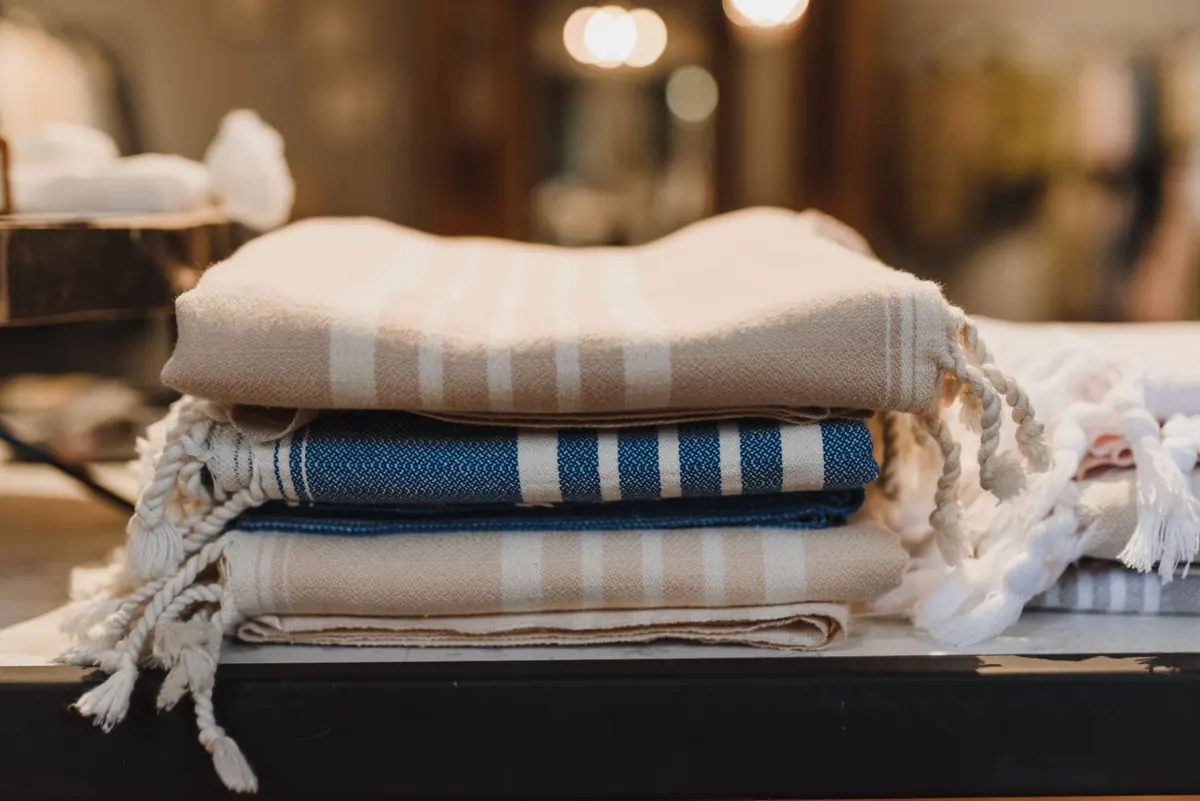
Why Your Linen Bath Towels Feel Scratchy (and How to Soften Them)
You bought linen bath towels for the way they feel after a shower — light, absorbent, quick to dry — and instead they scrape. It happens to plenty of us, and the instinct is to assume the fibre is wrong for your skin. Usually it isn't. Linen is crisp when new, and it softens over months of washing and use. A towel that feels harsh, stiff or coated after a few weeks is almost always a towel carrying something it shouldn't: leftover detergent, minerals from hard water, or the effects of being dried too hard and too fast. All three are fixable, and none of them mean replacing your towels.
Before You Blame the Fibre
There's a difference between crisp and scratchy, and it's worth knowing which one you've got.
New linen feels papery and cool. That's simply the fibre — flax, woven tightly — and it genuinely does soften with every wash and every use. Waffle-weave linen starts closer to soft; flat-weave linen, especially in a heavier weight, has a firmer hand that some people love and others never quite get on with.
Scratchy is different. It feels coated, or it seems to get rougher the more you wash it. Two quick tests:
- Wet a corner of the towel and rub it between your fingers. If the water feels slippery rather than just wet, there's residue sitting on the fibre.
- Smell the towel while it's damp. A faint whiff of perfume or soap means detergent hasn't rinsed away.
If either rings true, you're dealing with build-up, not bad linen.
Detergent Build-Up Is the Usual Suspect
Modern washing machines use very little water, and most of us add more detergent than a load can rinse out. The excess stays in the weave and dries into a stiff, slightly abrasive film. Fabric conditioner makes it worse. It works by coating fibres with a waxy layer — fine for a fluffy cotton towel, but on linen it leaves a slick, grippy surface that also kills absorbency. Tumble dryer sheets do much the same thing.
Signs you've overdone it: towels that feel stiff when dry but oddly slimy when wet, a greyish cast on white linen, or towels that no longer soak up water properly. Linen should drink water instantly.
Hard Water Leaves a Gritty Film
If you live in a hard water area, your towels are being washed in a mild mineral solution. Calcium and magnesium don't rinse away cleanly; they settle into the weave and dry into something that feels like fine sandpaper against skin.
You'll recognise it elsewhere in the house — a furred kettle, soap that won't lather, a chalky ring around the bath. In the laundry, hard water also means detergent works less efficiently, so people add more of it, and the two problems feed each other.
The answer isn't more detergent. Use less, add a rinse aid to the final rinse — 100–200 ml of white vinegar in the conditioner compartment is the classic, cheap option — and consider a laundry water softener if your water is very hard. Vinegar helps shift the alkaline detergent residue that hard water leaves behind. Don't mix it with bleach in the same cycle, and don't pour it straight onto the linen.
Drying Mistakes That Set Roughness In
How you dry matters as much as how you wash. The usual culprits:
- Over-drying in a hot tumble dryer. Linen loses moisture fast. Left in too long, it comes out brittle and harsh. Take it out while it still feels faintly damp.
- Tumble dryer sheets. Skip them. Wool dryer balls do the softening job without leaving a coating.
- Line drying in a tight lump. Pegged by one corner so the towel dries folded in half, creases set hard and feel rough. Shake it out with a snap, then peg along the long edge.
- Days in blazing sun. A few hours of sun is fine and helps whiten linen. A week on the line makes it stiff and faded.
- Putting damp towels away. Mildew leaves a rough, musty surface that no amount of conditioner will fix.
The Reset Wash That Brings Linen Back
Once you know what's on the towels, strip it off. Do this with a full load of towels so the drum is reasonably balanced.
- Check the care labels. Pure linen handles 60°C well; linen-cotton blends and waffle weaves are often safer at 40°C.
- Load the drum loosely — towels need room to move and rinse.
- Use half your normal detergent, or skip it entirely if the towels are heavily coated, and add a scoop of soda crystals (washing soda, not caustic soda).
- Run the longest, hottest cycle the labels allow, with an extra rinse.
- Put 100–200 ml of white vinegar in the conditioner drawer for the rinse.
- Repeat once if the towels were badly affected. You'll often notice a difference after the first go.
Then dry them properly: shake each towel out, line dry or tumble on low, and finish with ten minutes on low heat, ideally with dryer balls. Give each towel a hard snap before folding it.
Change the habits behind the problem
Go forward with roughly half the detergent you've been using, no fabric conditioner and no dryer sheets. Wash towels separately from jeans, zips and heavy knits, and don't overload the machine. A vinegar rinse once a month keeps hard water in check.
Give It a Few More Washes
Linen bath towels are a long game. Most reach their softest somewhere between the tenth and twentieth wash, and they keep improving for years — which is exactly why they outlast the fluffy towel that shed its pile after a season.
So if your towels are new, wash them, use them and be patient. If they're two years old and suddenly rough, run the reset wash. In most cases, one strip wash, less detergent and a gentler drying routine will hand you back the towel you thought you'd bought.
And if they still feel harsh against your skin? You may simply prefer waffle weave to flat, or a linen-cotton blend to pure linen. That's a preference, not a fault — and there's no shame in buying the towel that suits the way you actually dry off.
Photo: Arina Krasnikova / Pexels


You Might Also Like
Practical ways to use linen bedding and pyjamas, plus a ventilation routine, to sleep comfortably through a British heatwave.
A practical guide to storing towels, bath mats and laundry in a compact UK bathroom — keeping everything dry, tidy and easy to reach without a bigger room.