Small Bathroom, Big Linen: A Space-Saving Storage Guide
A small bathroom has one real enemy, and it isn't the lack of floor space. It's moisture with nowhere to go. Stack six towels on a shelf above the radiator in a room with one narrow window and, within a day or two, the bottom two will start to smell faintly of a cupboard that never quite dried out. The answer isn't a bigger room. It's a system: fewer linens in play at once, better airflow around the ones you do keep there, and a clear place for everything to sit while it dries. Here's how to make that work in a bathroom where the door barely clears the sink.
Start with a proper audit
Before you buy a single basket, take everything linen-related out of the bathroom and pile it on the landing. It's usually more than you think: bath towels, hand towels, guest towels nobody has used since Christmas, two bath mats, a face cloth collection, and a laundry pile quietly composting in the corner.
Now decide what genuinely needs to live in there. The honest rule is simple — only the current rotation stays. Spare towels, beach towels, bedding and anything for guests belong in an airing cupboard, a bedroom wardrobe or a lidded box under the bed. If you have nowhere else, that's a storage problem for the rest of the house, not something a corner shelf can solve.
While you're at it, measure these, because guessing is how people end up with a trolley that blocks the door:
- Depth and height of any existing shelf, including the gap to the ceiling above it
- The space under the basin — often wasted, often just deep enough for two baskets
- The clear width between the door and the nearest fixture when the door is open
- Distance from the shower or bath to the nearest rail or radiator
- The floor strip beside the loo or washing machine, where a slim basket might slot
Towels: keep the working set small
Most small bathrooms are over-towelled. A workable rotation is two towels per person: one in use, one drying or waiting. That's it. Wash, dry, rotate. It sounds austere until you realise you've stopped washing eight towels a week because four of them went musty.
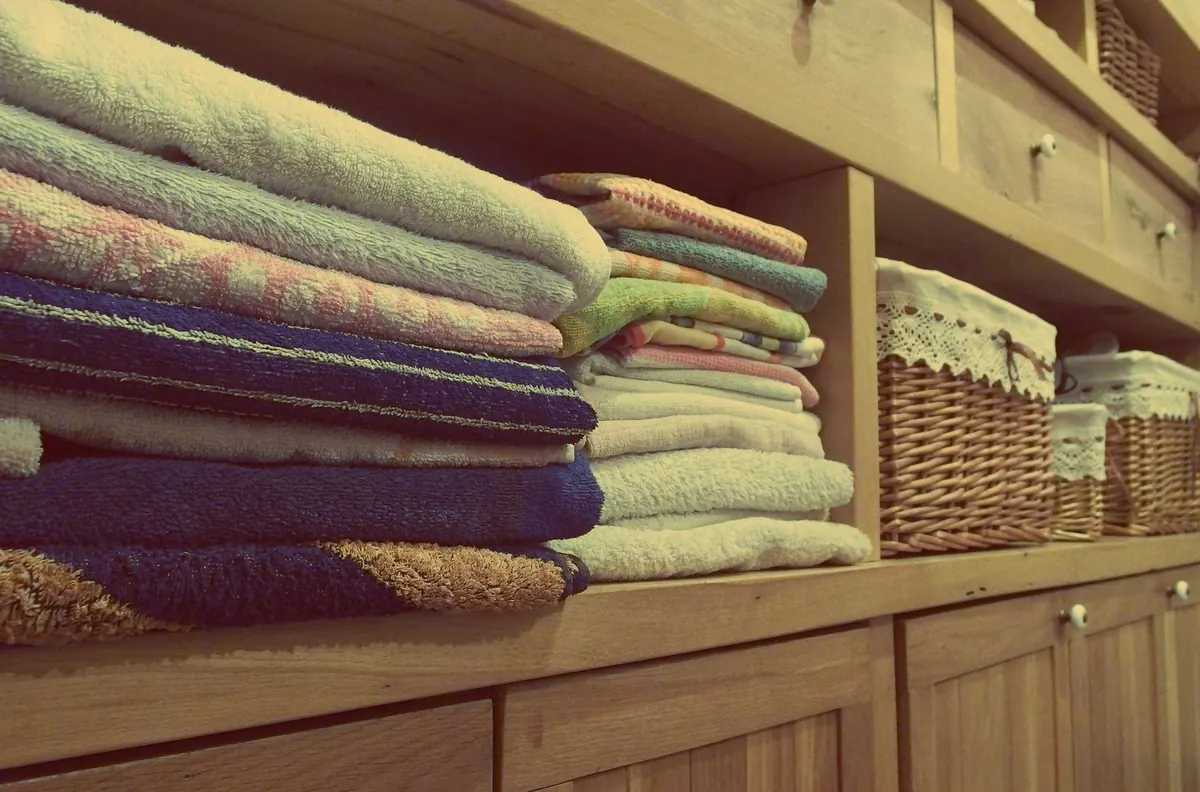
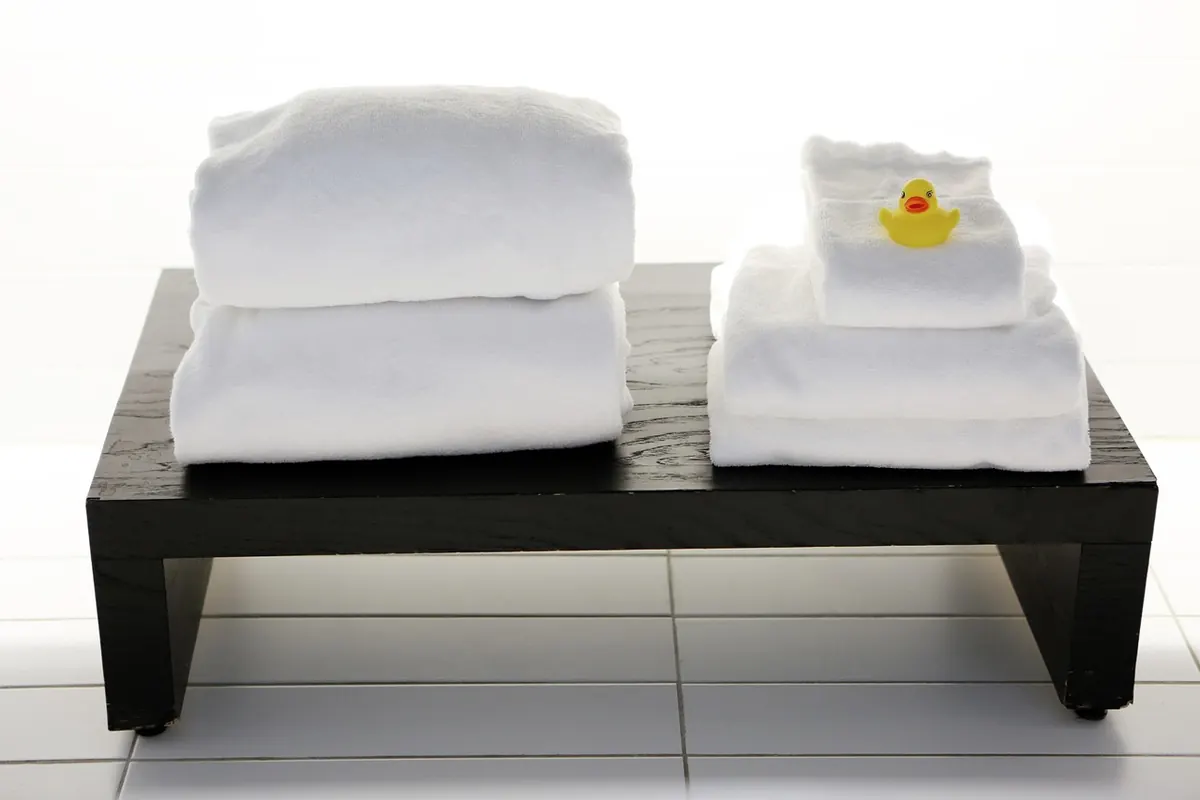
How you store them matters as much as how many you keep. Folded towels need air between the layers. Stack three high at most on an open shelf, and never stack a towel that's still slightly damp — one clammy towel in the middle of a pile will taint the whole stack within a day. Rolls look smart in photographs, but a rolled towel holds its own moisture in the centre. Better on a shelf than nothing, worse than a rail.
Rail and hook tactics that work in tight rooms
- Use a towel radiator as a drying rail, not a display rack. Hang towels with a hand's width between them, then move them on once dry.
- Over-door hooks are ideal when you can't drill into tiles, but the back of a bathroom door is a humid spot. Leave the door ajar after showers.
- Suction hooks only grip properly on smooth, glazed tiles. They'll pop off grout lines, textured tiles and painted walls, usually at 2am.
- Linen towels and waffle-weave cotton dry noticeably faster than heavy plush cotton, which is worth knowing in a room with little airflow.
Bath mats: the damp culprit nobody blames
A rubber-backed mat left flat on the floor after a shower is a sponge with a waterproof lid. Water gets underneath and stays there, and the underside of the mat is where the smell starts. Shake it out and drape it over the edge of the bath or a rail after every use — even five minutes of hanging makes a difference.
If your mat never quite dries, own two and rotate them, so one is always airing. Waffle-weave and plain cotton mats dry faster than deep-pile ones. Wash mats weekly on the cycle the care label allows, and dry them properly before they go back on the floor. In winter, a spell on a radiator or an airing rack beats a cold, dark bathroom every time.
Laundry without the sprawl
The mistake is treating the bathroom as the main laundry hub when it's really just the collection point. Keep a small basket or bag in there, and a larger hamper somewhere drier where the bulk actually accumulates. Empty the small one every day or two rather than letting it build.
- A slim lidded basket beside the basin hides the contents neatly, but choose one with ventilation slots or a breathable canvas liner — a sealed plastic box holds damp in.
- A hanging canvas bag on the back of the door takes up no floor space and keeps wet flannels away from everything else.
- Two compartments (lights and darks, or towels and everything else) save sorting later, if the space allows.
- A small mesh bag for reusable face cloths and make-up pads stops them disappearing into the main wash.
Ventilation is the whole game
You can buy every storage solution on this page and still lose the battle if the room can't breathe. Run the extractor fan during and for a good while after every shower, open the window when you can, and leave the door open once you're dressed. A squeegee on the shower screen takes fifteen seconds and cuts a surprising amount of standing water.
Don't use the bathroom as a drying room unless the ventilation genuinely copes — hanging wet washing in a small, sealed space simply moves the problem from your towels to your walls and grout. If you have persistent damp patches, peeling paint or mould that keeps returning despite good ventilation, it's worth getting proper advice rather than just wiping it down again. Mould near ceilings, extractor fans or electrics is a job for someone qualified.
Furniture and fittings that earn their footprint
Choose shallow over deep. A 15cm-deep shelf above the loo holds folded towels and looks tidy; a 35cm unit juts into the room and makes everything feel cramped. Slim rolling trolleys slot between the basin and the wall and can be wheeled out for cleaning. Corner shelves and wall-mounted ladder racks use height rather than floor, which is almost always the better trade in a small room.
Keep the floor as clear as you reasonably can. Baskets stacked on the floor collect dust and make the room feel smaller; the same basket on a low shelf or inside a vanity unit reads as intentional. And if you're replacing anything, consider a wall-mounted rail over a freestanding towel stand — it costs nothing in floor space and dries towels more evenly.
A five-minute weekly reset
Small systems fail quietly, so give yours a short weekly check. Empty the laundry basket. Pull out every towel and feel it — anything still damp goes on the rail, not back on the shelf. Rotate the bath mats and put the used one in the wash. Wipe the shelf, shake out the baskets, and check the corners behind the door for anything that's crept in.
Five minutes, once a week, and a bathroom the size of a cupboard will hold its linen comfortably — dry, tidy, and with nothing festering underneath the mat.
Photo: Life-Of-Pix / Pixabay

You Might Also Like
Practical ways to use linen bedding and pyjamas, plus a ventilation routine, to sleep comfortably through a British heatwave.
Linen creases, but it presses beautifully with the right heat and moisture. A practical UK guide to iron settings, steam technique and avoiding shiny marks.