The Linen Table Setting Checklist for Sunday Lunch
Sunday lunch is a slow business. There is a chicken in the oven, someone is peeling potatoes badly, and the table is still covered in the morning's newspapers and a half-finished crossword. Linen is the fastest way to make that table look as though the day had a plan all along.
The mistake most of us make is layering everything at once: a patterned cloth, a runner on top, four different placemats and napkins in a contrasting colour. It looks busy rather than generous. The checklist below works backwards from the way a table is actually used, so each layer has a job rather than a decorative one.
Start with the base layer and commit to it
Decide first whether the table is wearing a full cloth or showing its timber. Both are correct. A full-length linen tablecloth suits a scratched pine table, a table that is too small for the number of people, or any occasion where you want the table to read as one calm surface. A runner suits good wood, a long table, and lunch that will stretch past four o'clock.
If you go the cloth route, look for an overhang of roughly 25cm on each side. Less than that and the cloth looks like it shrank; much more and it becomes a trip hazard for anyone carrying a hot dish. If you go the runner route, leave a clear band of bare wood at the edges — around 20cm is usually enough — so the runner reads as a deliberate stripe rather than an undersized cloth.
One rule saves a lot of grief: do not put a runner over a patterned tablecloth. Over a plain cloth, fine. Over checks, stripes or a print, you will have two competing geometries and no amount of nice glassware will rescue it.
Placemats, and where they actually sit
Linen placemats are the layer that does the quiet work: they catch spills, define each person's space, and stop cutlery clattering directly on wood. Choose ones big enough for a dinner plate plus a side plate, with a little breathing room — somewhere around 35cm by 45cm is a sensible lunch size. Anything smaller and the plate hangs over the edge, which always looks like an accident.
If you are using a centre runner, placemats sit either side of it, not on top. Nothing should straddle the runner at an awkward angle. The layering order, bottom to top, runs like this:
- Tablecloth or bare wood (the base)
- Runner or placemats — pick one to lead, let the other support
- Placemat, if you are using both runner and mats
- Plate, then side plate to the left
- Cutlery, working inwards from the outside
- Napkin — on the plate, beside the forks, or in a glass, but only one of those
- Glassware, above and to the right of the knife
Mix textures by all means — a slubby stonewashed runner with smooth damask napkins is a lovely pairing. Mixing prints is where a table starts to argue with itself.
Napkins people will actually use
A lunch napkin wants to be roughly 40cm to 45cm square. Bigger than that is a dinner napkin and will swamp a side plate; smaller and your guests will end up wiping their hands on their laps in secret. If you only buy one thing for the table, buy good napkins. They are the piece that ends up in someone's hands.
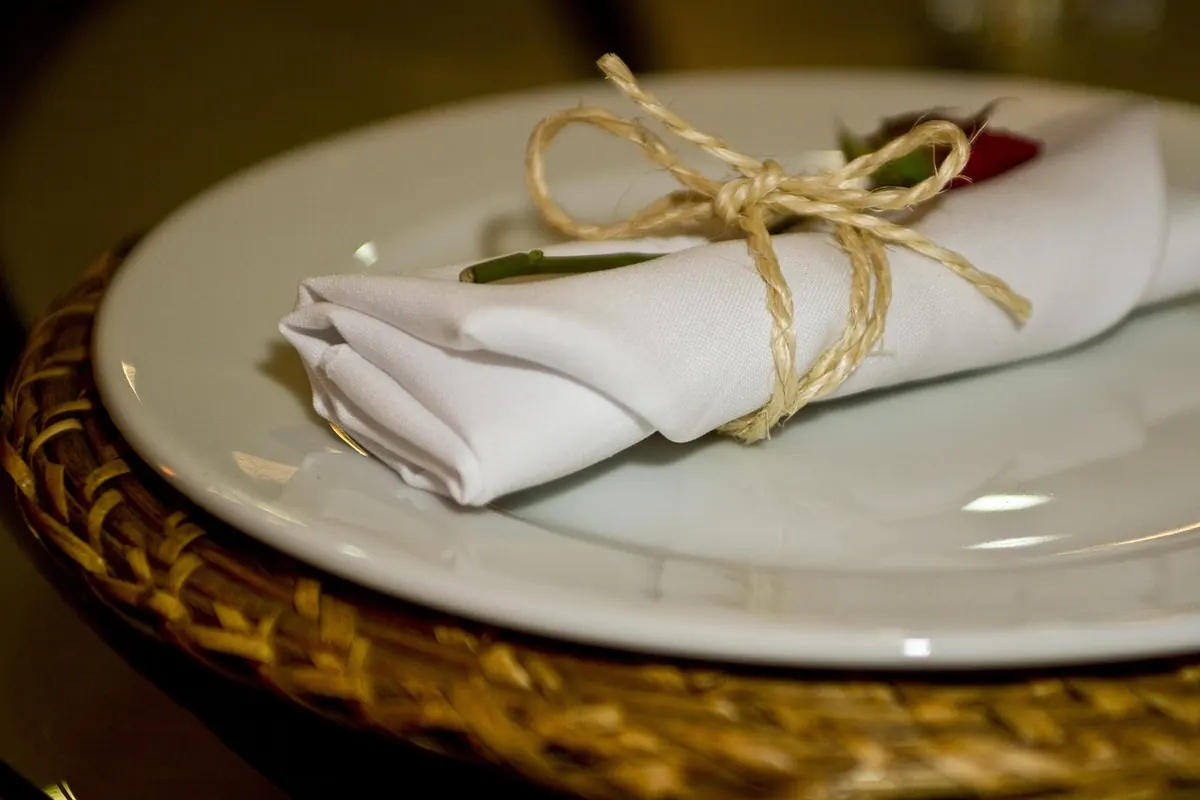
Folding should take seconds, not minutes. Fold in half, then in thirds, and press the fold with your palm. A loose roll through a plain napkin ring looks relaxed and travels well. Skip the fan shapes, the swans and the standing pyramids; at Sunday lunch they signal effort in the wrong direction.
Where to put them: on the plate if the first course is coming plated, to the left of the forks if the table is set before people sit down, or in the water glass if space is tight. Just be consistent, so nobody has to work out the system.
Nothing on the table should be there for show alone. If it cannot be used, it is clutter with better manners.
Glassware that suits linen rather than fights it
Two glasses per person is plenty for Sunday lunch: a water tumbler and a wine glass. Three or four looks like a restaurant trying too hard, and it crowds the space you have just created with placemats. Position them above the knife, running diagonally down and to the right, with enough gaps that a reaching hand does not produce a chime.
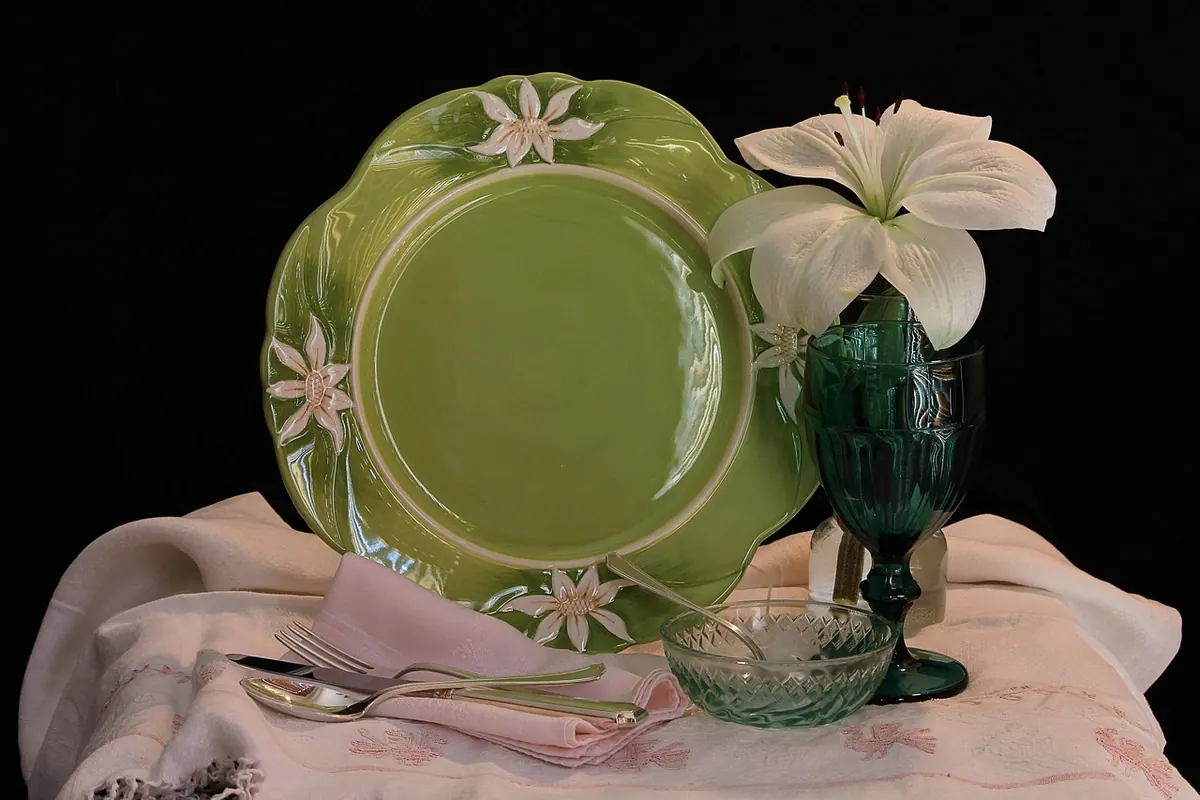
Plain glass works better against linen than heavy cut crystal, particularly if your cloth or runner has any texture. Coloured stems are fun but they pin your table to a single palette, so save them for a table dressed entirely in white.
Put the water jug on a small linen coaster or a short second runner. Water rings on bare wood are the one mark that no amount of lavender sprigs will distract from.
The Sunday lunch linen checklist
- Count the guests, then add one place setting. Somebody always brings somebody.
- Choose the base: cloth or wood. Measure the overhang before you iron anything.
- Check every napkin and placemat for old stains in daylight, not lamplight.
- Press the cloth, runner and napkins while slightly damp, then hang or roll them flat.
- Set the table the night before: cloth, runner, placemats, cutlery, glasses, all but the napkins.
- Leave the napkins and the water jug for the morning, so they look fresh rather than staged.
- Wipe the rims of the glasses at the last minute with a clean linen cloth.
Keeping linen ready for next Sunday
Linen is more forgiving than its reputation suggests. A cool or warm machine wash — 30°C to 40°C is a sensible everyday setting — a gentle detergent, and a line or airing-rack dry will keep it in good order for years. Avoid chlorine bleach on anything coloured, and skip fabric softener, which coats the fibres and reduces the very absorbency you want in a napkin.
Iron while the cloth is still faintly damp, or mist it as you go. Linen creases; that is part of its character, and a table that looks slightly lived-in is warmer than one pressed to cardboard. Light starch on napkins only, never on a tablecloth you want to drape.
Store cloths rolled rather than folded into hard quarters, and rotate them. A cloth that spends a decade on the same crease will eventually show it.
The ten-minute finish
On Sunday, once the meat is resting, walk the table once and look at it as a guest would. Straighten the runner so it hangs evenly at both ends. Set the napkins down last. Fill the jug and put it on its coaster. Light a candle if the day is grey, open the window if the kitchen has steamed up, and call everyone in. The linen has already done the hard part.
Photo: rodrigozanholo / Pixabay
You Might Also Like
Practical ways to use linen bedding and pyjamas, plus a ventilation routine, to sleep comfortably through a British heatwave.
A practical guide to storing towels, bath mats and laundry in a compact UK bathroom — keeping everything dry, tidy and easy to reach without a bigger room.